The Critical Role of Coaching Education in Sport
Posted by: Admin | on October 10, 2025
The Critical Role of Coaching Education in Sport
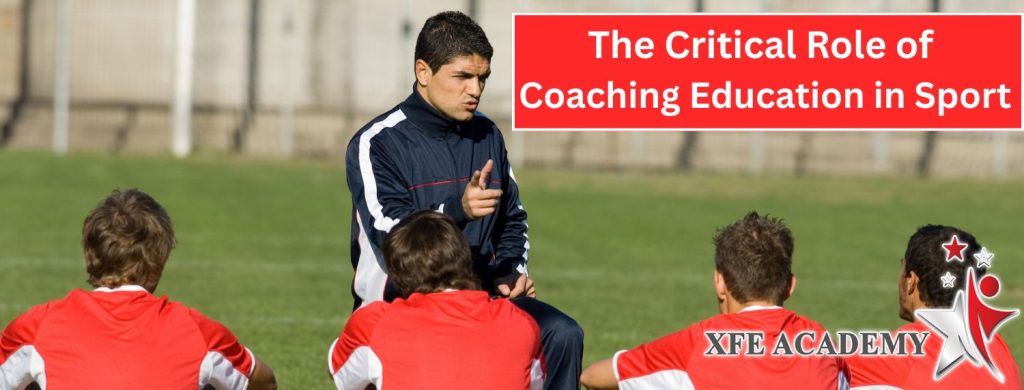
In the world of sport, the difference between good and great often hinges not just on the talent of the athlete, but on the quality of guidance, planning, and education behind them. Coaching is more than giving instructions; it’s about fostering growth, safety, performance, and character. That’s why coaching education is so important — and why choosing the right institution to train coaches is a decision with far-reaching impact.
Why Coaching Education Matters
Here are key reasons why professional coaching education is vital:
Safety & Injury Prevention
Coaches need a deep understanding of anatomy, biomechanics, load management, recovery, and injury risk. Without proper education, well-meaning coaches can inadvertently push athletes into harmful practices.Long-Term Athletic Development
A coach educated in development models can guide athletes through age-appropriate progressions, balancing skill acquisition, physical conditioning, and mental resilience.Scientific & Evidence-Based Practice
Sport science — physiology, psychology, nutrition, biomechanics — underpins modern high performance. Coaches who are educated can apply evidence rather than relying on outdated rules of thumb.Ethical Leadership & Mentorship
Athletes look to coaches as role models. Education helps coaches understand ethics, inclusivity, athlete welfare, and how to create psychologically safe and supportive environments.Professional Credibility & Standards
A formal coaching qualification helps raise the standard of coaching and sets a benchmark for accountability. It also increases employment prospects and legitimacy.Adaptability & Continuous Learning
With evolving techniques, technology, and research, coaches need a foundation that encourages lifelong learning and adaptation.
Given all that, the question becomes: which institution gives you the best foundation in coaching education? Let me show you how XFE Academy is especially strong in that regard.
Why XFE Academy Excels in Coaching Education
XFE Academy (a division of Xtyle Fitness & Entertainment) positions itself as one of Africa’s top academies for fitness, sport coaching, officiating, and related disciplines. xfeacademy.co.za Below are the strengths that make it stand out.
1. Comprehensive & Accredited Curriculum
Their Diploma in Coaching Science integrates sport science with coaching theory, enabling graduates to become coaches, teachers, managers or trainers. xfeacademy.co.za
Qualifications are nationally and internationally recognised, with accreditations from bodies such as CATHSSETA, REPSSA, and NCSF (USA).
They don’t just teach “coach 101” — they include advanced content, suitable for those aiming to coach at higher levels. xfeacademy.co.za
2. Flexible Modes of Study
For students outside Gauteng or the Western Cape, XFE offers live streamed lectures and online or correspondence options. xfeacademy.co.za
Their course structure caters to different paces: full time, correspondence, or online. xfeacademy.co.za
This flexibility helps broaden access, ensuring talented individuals from more remote areas can also benefit from high quality training.
3. Industry Exposure & Networking
One of XFE’s unique advantages is its direct integration with fitness, events, and entertainment sectors:
The parent company, Xtyle Fitness & Entertainment, runs major fitness and bodybuilding events in South Africa. This gives students insider exposure to real events and industry professionals. xfeacademy.co.za
Students have hands-on opportunities to engage with event planning, logistics, coaching, and networking, effectively linking theory to practice. xfeacademy.co.za
This type of experiential learning helps coaches emerge not just with academic knowledge, but with real-world readiness.
4. Exclusive & Customised Course Options
XFE offers “exclusive access” to certain courses and custom packages that set students apart. xfeacademy.co.za
They tailor course material and combinations to match individual interests and goals (e.g. specialising in two sports) xfeacademy.co.za
That means students can shape their coaching path rather than shoehorning into a one-size-fits-all program.
5. Reputation, Accreditation & Recognition
XFE is listed as an accredited training provider under REPSSA (Register of Exercise Professionals South Africa), ensuring that its qualifications carry legitimacy in the South African fitness and coaching industry. repssa.com
Their marketing and public presence suggest they “don’t just claim, they do” — a confidence backed up by alumni testimonials and visible successes. xfeacademy.co.za
6. Holistic Integration (Fitness, Nutrition, Coaching)
Unlike institutions solely focused on sport or coaching, XFE brings together fitness training, nutrition education, sport coaching, officiating, and event management. xfeacademy.co.za
This integrated approach means coaches graduate with well-rounded skills: not just how to coach, but how to advise on conditioning, nutrition, event delivery, and athlete lifestyle support.
How to Use This: Advice for Prospective Coaches & Stakeholders
If you’re a budding coach, school sports director, sports federations or even a parent looking for the right training route, here are some practical thoughts:
Evaluate accreditation first. A certificate is only as good as the body backing it. XFE’s alignment with REPSSA, CATHSSETA, and international bodies is a strong signal.
Check for applied learning opportunities. Theory is essential, but working with real clients, teams, or events separates the test-taker from the effective coach.
Consider flexibility. Life, travel, work all affect how someone can study. Modes like live stream & correspondence increase accessibility.
Look for integrated curriculum. Sports coaching doesn’t exist in a vacuum — fitness, nutrition, management must also be understood.
Ask for graduate success stories. Where do alumni of the program end up? Are they coaching high level teams, or getting roles within federations or clubs?
In all of these, XFE scores highly.
Sample Outline — What a Coaching Education Blog Could Cover (If You Want to Expand)
If you want to expand this into a long-form blog (say 1,500-2,000 words), you might structure like:
Opening anecdote or story: maybe a coach whose life was transformed by education
The problem: unqualified coaches, risks, plateaued performance
The science behind coaching
What to look for in a coaching education provider
Why XFE stands out (as above)
Testimonials / case studies (student stories)
How to enroll / next steps
Conclusion & call to action
You could also intersperse quotes, infographics (e.g. “Coach vs Uneducated Coach: differences”), and images from XFE events to make it visually engaging.